Case studies
across mobility, media, and SaaS.
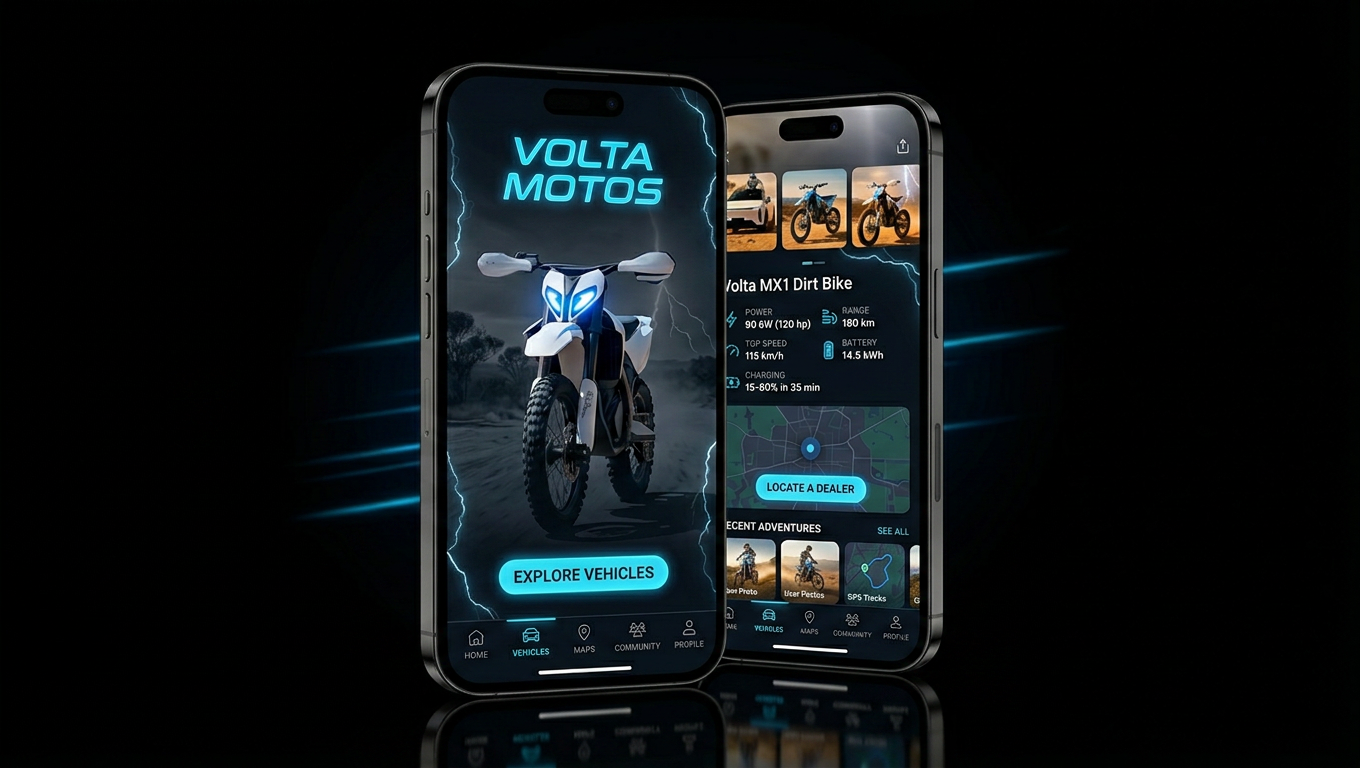
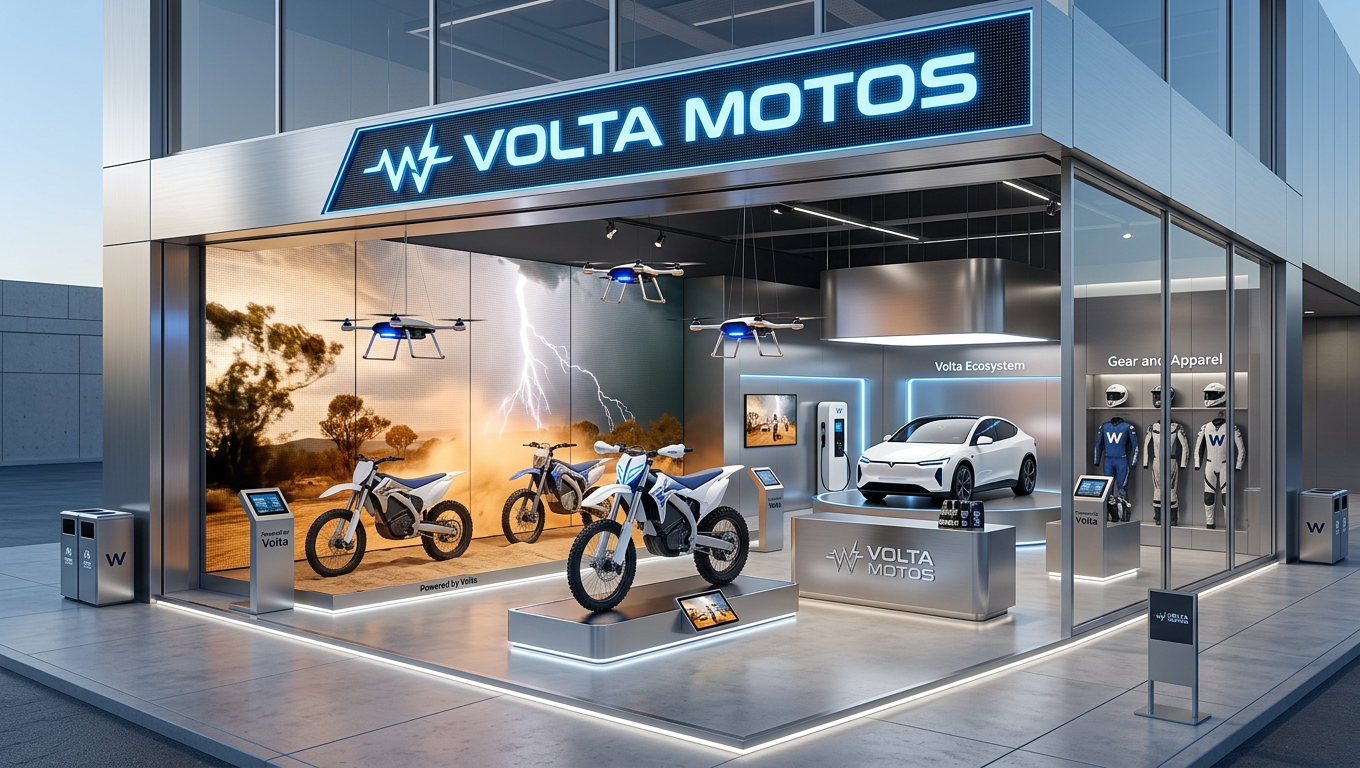
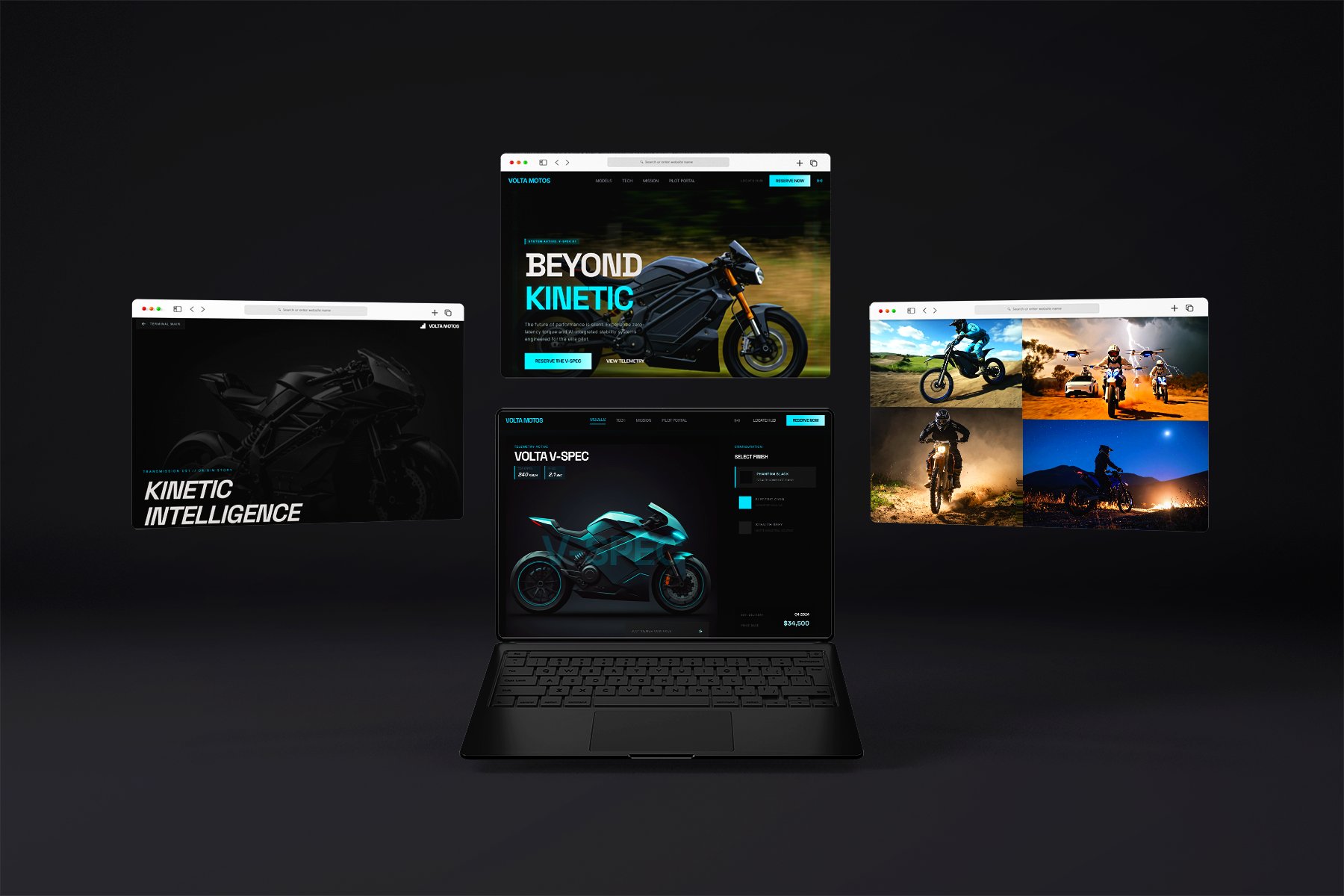
Build a complete digital brand and automated business pipeline from zero — without the cost, lead time, or creative overhead of a traditional agency model.
Volta needed to launch fast, launch smart, and build infrastructure that could scale without adding headcount. The mandate was AI-first, end to end.
Instead of running a conventional creative workflow with AI bolted on, I replaced the workflow entirely. Using GPT-4, advanced prompt engineering, and generative visual tools, I architected an end-to-end automated content ecosystem — covering brand identity, social pipelines, and video production — before a single external hire was made.
- Brand & digital identityGenerative AI drove the full brand system, locking in consistency across every asset and touchpoint from day one.
- Workflow automationAutomated social pipelines and AI-driven video production replaced manual creative cycles and compressed delivery timelines dramatically.
- Strategic integrationProcess analysis surfaced the highest-value AI integration points, translating into a roadmap aligned with Volta's commercial milestones.
- Structural automationEmerging tech was embedded into the foundational operations — intelligence as part of the business architecture, not just the output.
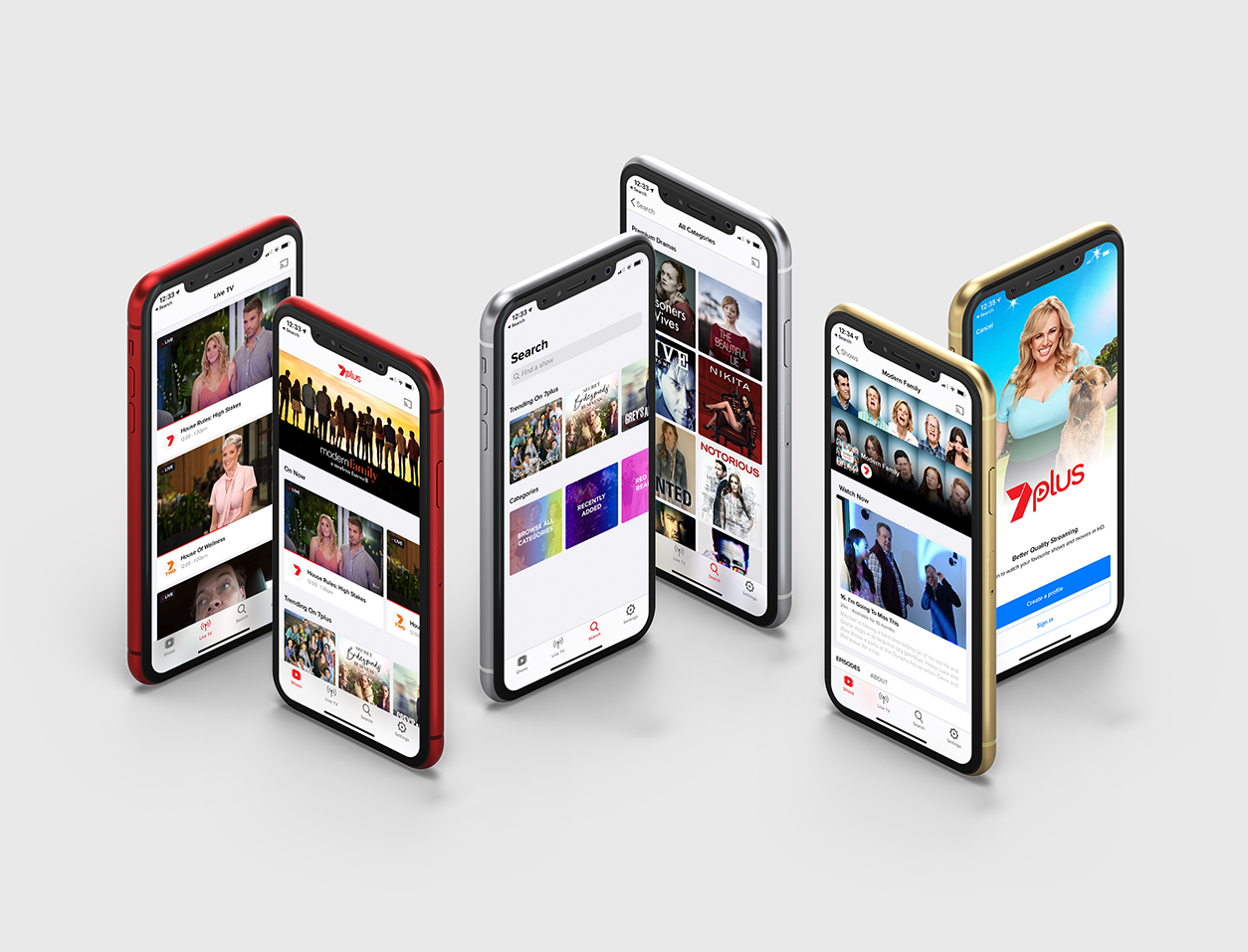
Launch a world-class streaming service across ten platforms simultaneously — iOS, Android, Apple TV, Samsung TV, PlayStation 4, and more — in twelve months.
The challenge wasn't aesthetic coherence. It was engineering a system flexible enough to stretch from a 1.5-inch watch face to a 100-inch living-room display without losing the brand's identity at any point along the way.
I built the P8 Atomic Design System — a four-level hierarchy that made scale manageable and speed sustainable.
- ElementsFoundational layer — labels, buttons, base symbols.
- ModulesPredictable interaction patterns — show tiles, posters, info panels.
- ComponentsComposed environments — content shelves, grid layouts.
- PagesComplete user experiences with defined load priorities and above-the-fold logic.
The system was governed by five R.E.S.E.M. principles — Reusable, Easy, Simple, Efficient, Modular. UX was anchored to four motivators from the Contextual Archetypes framework: Empowerment, Control, Surprise, Delight. Not aspirational values — design constraints.

A clunky, non-responsive CRM was bottlenecking new customer acquisition. An expensive sales-led onboarding process meant every new account required heavy manual intervention.
The business didn't need a redesign. It needed a different operating model.
I led the transition from sales-led to product-led growth — shifting the core thesis from "our sales team sells the product" to "the product sells itself."
That meant rebuilding the platform architecture from the ground up: a modular system letting non-profits activate only the capabilities they needed, reducing complexity and onboarding friction at the same time. Alongside the redesign, I developed a feature roadmap prioritised by user impact and built the documentation infrastructure to support a scaling team.
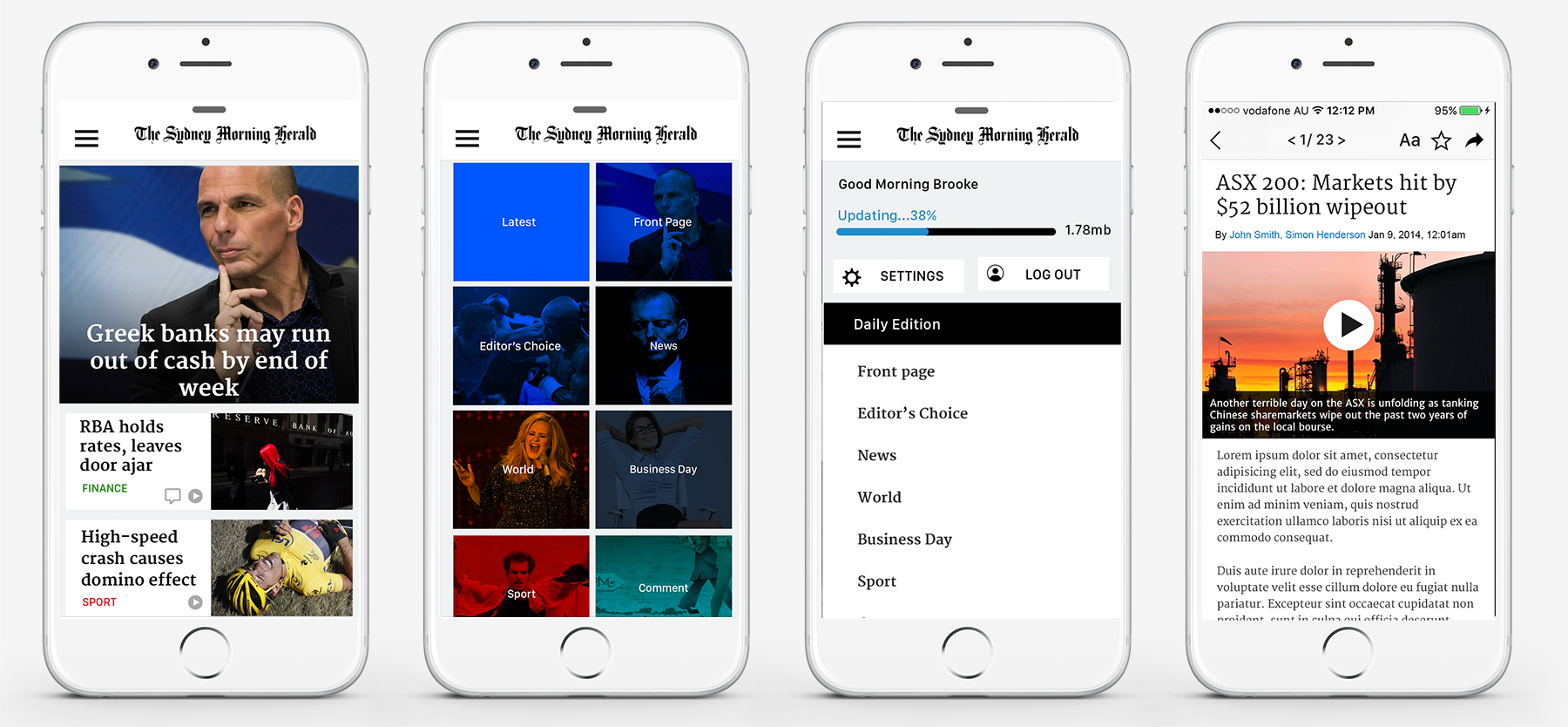
The Sydney Morning Herald carried 180 years of journalistic authority and 7.68 million digital users who expected both — breaking news at speed and premium long-form journalism worth paying for.
Translating that dual mandate into a native mobile experience — while simultaneously building an architecture scalable across the entire Fairfax portfolio — was the design problem.
I led UX and information architecture for the SMH's first native iOS app, designing content hierarchies that could hold breaking news and long-form journalism in productive tension — each format given the visual weight and interaction model it required.
The larger play was a universal app architecture: a single codebase adaptable across all Fairfax brands, including the AFR. As sole app designer, I ran workshops and mentored web designers through the transition to mobile-first principles — building internal capability alongside the product.